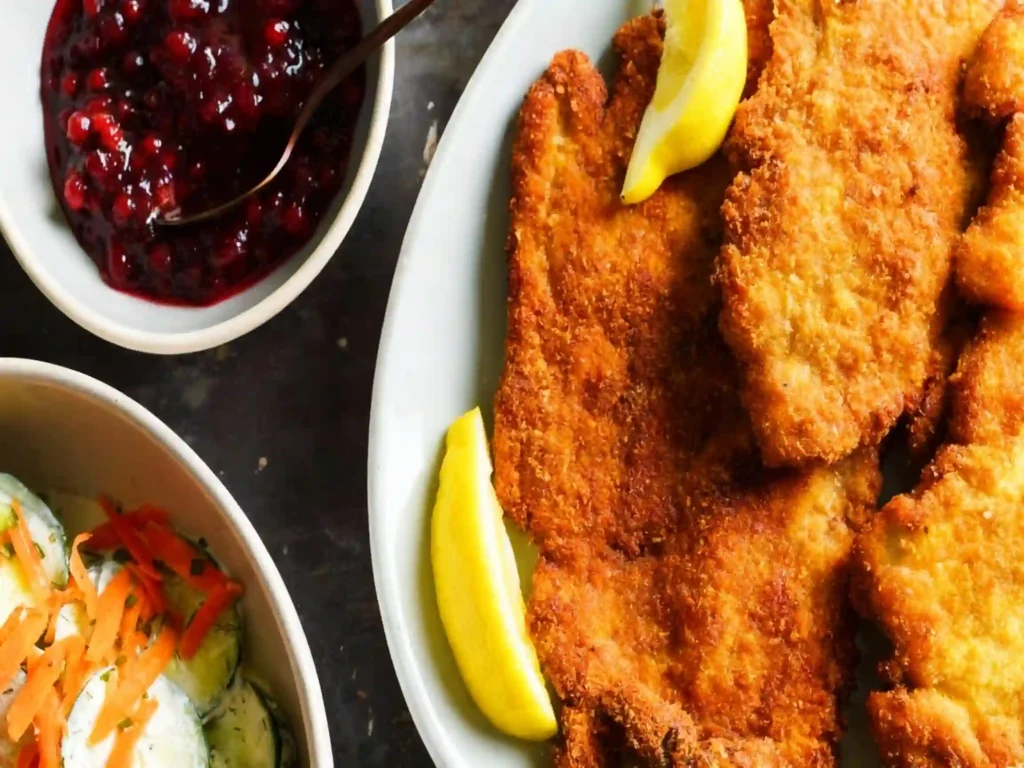
There is a special kind of quiet that falls over a German kitchen just before schnitzel hits the pan.
Someone is at the table, pounding pork cutlets under a layer of baking paper, the meat mallet tapping a gentle rhythm that makes the plates in the cupboard rattle ever so slightly.
On the counter, a bowl of potato salad is resting, a pile of lemon wedges waits on a small plate, and children sneak in to ask, “Is the schnitzel ready yet?”
The answer is always the same: “Almost—once the oil starts to sing.”
When the first schnitzel slides into the pan, the kitchen fills with the sound of sizzling and the smell of butter and breadcrumbs turning golden.
Everyone moves a little closer to the table, because there is nothing quite like that first bite: loud crunch, tender pork, bright lemon, and the feeling that, for tonight at least, everything is warm and taken care of.
This recipe is written to bring that same feeling into your home.
You do not need a fancy kitchen or special equipment—just simple ingredients, a big pan, and a few cozy minutes to stand by the stove while the schnitzel turns crisp and golden.
What Is Schweineschnitzel?
Schweineschnitzel is a classic German dish made from thin slices of pork that are breaded and quickly fried until they are crisp on the outside and tender inside.
It is the everyday cousin of Austrian Wiener Schnitzel (which uses veal), and you will find it in family kitchens, small village Gasthäuser, and at simple lunch counters across Germany.
Because the meat is pounded very thin, it cooks in just a few minutes, making Schweineschnitzel a perfect weeknight dinner that still feels like a special occasion.
Served with lemon, potato salad, cucumber salad, or red cabbage, it becomes a complete, comforting plate that fits beautifully into a German family‑food routine.
Why You’ll Love This Recipe
- Thin, crisp coating that stays light, not greasy
- Simple, budget‑friendly ingredients you can find anywhere
- Ready in about 30 minutes once the meat is prepped
- Easy to adapt for kids, picky eaters, or even chicken or turkey instead of pork
If you already enjoy dishes like German potato salad, red cabbage, or cucumber salad, this schnitzel will feel like the missing main dish that ties them all together.
Ingredients for Classic German Pork Schnitzel
For about 4 servings:
- 4 boneless pork chops or pork loin steaks (pounded thin, about 0.5–0.6 cm / ¼ inch)
- Salt and freshly ground black pepper
- ½ cup (60 g) all‑purpose flour
- 2 large eggs
- 1–2 tablespoons milk or water (optional, to loosen the eggs)
- 1½–2 cups (about 150–200 g) plain fine breadcrumbs
- Neutral oil for frying (such as sunflower or canola), plus 1–2 tablespoons butter if desired
- Lemon wedges, for serving
Optional, but nice to mention in notes:
- Paprika for a mild warmth
- Fresh parsley to sprinkle on top
How to Make Crispy Schweineschnitzel
1. Pound the Pork
Place each pork chop between two sheets of baking paper or plastic wrap.
Use a meat mallet or the flat side of a heavy pan to gently pound the pork until it is evenly thin, about 0.5–0.6 cm (¼ inch).
Even thickness is important: it helps the meat cook quickly and stay tender, with no raw spots or chewy edges.
2. Season and Set Up the Breading Station
Season both sides of each piece of pork with salt and pepper.
Prepare three shallow dishes:
- Dish 1: flour
- Dish 2: beaten eggs (and a splash of milk or water if you like)
- Dish 3: plain breadcrumbs
This classic three‑step breading is the secret to a light, crisp coating that clings beautifully to the meat.
3. Bread the Schnitzel
Work with one piece of meat at a time:
- Dredge the pork lightly in flour, shaking off any excess.
- Dip it into the egg, letting extra egg drip back into the bowl.
- Lay it into the breadcrumbs, turning and gently pressing so the crumbs cling on all sides, but do not mash the coating down too hard.
Place the breaded schnitzel on a plate or tray and repeat with the remaining pieces.
Let them rest for a few minutes while you heat the oil—this helps the crumbs stick better when frying.
4. Fry Until Golden and Crisp
Choose a wide pan so the schnitzel can cook without overlapping.
Pour in enough oil so the schnitzel can “swim” lightly—usually about 0.5–1 cm (¼–⅓ inch) deep—then heat over medium‑high heat.
To test the temperature, drop in a breadcrumb: it should sizzle immediately but not burn.
Add a small knob of butter if you like the extra flavor and color.
Fry each schnitzel for about 2–3 minutes per side, or until deep golden brown and crisp.
Gently tilt the pan and spoon hot oil over the top of the schnitzel as it cooks to help the coating puff slightly.
Transfer the cooked schnitzel to a wire rack or a plate lined with paper towels to drain.
Keep warm in a low oven while you finish the remaining pieces.
How to Serve Schweineschnitzel
Schweineschnitzel is all about contrast: hot and crisp meat, cool and tangy sides, and a bright squeeze of lemon.
On your site, this is the perfect place to guide readers into your existing German recipes by linking to them naturally.
Consider these plate ideas and anchor texts:
- Serve with a warm German potato salad for a traditional, cozy plate.
- Add a scoop of German red cabbage (Rotkohl) for a sweet‑sour balance and beautiful color.
- Offer a fresh German cucumber salad (Gurkensalat) on the side to keep the meal light.
- Include a small dish of German mustard sauce so everyone can add a gentle tang without hiding the schnitzel’s crunch.
Each of these phrases can link directly to your existing posts, creating a little “German dinner path” for your readers as they explore your site.
Tips for Family‑Friendly Success
- Use thin meat. Thinner schnitzel cooks faster and is easier for little mouths to chew.
- Let kids help. Children can help with squeezing lemons, setting the table, or carefully dipping the meat in flour (supervised, of course).
- Adjust seasoning. Keep the coating mild and let adults add extra salt, pepper, or mustard at the table.
- Make extra. Leftover schnitzel is fantastic cold in sandwiches on rustic bread the next day.
For families who prefer chicken or turkey, note in a short paragraph that they can swap the pork for thin chicken cutlets or turkey schnitzel using the exact same method.
Make It a Little Lighter (Optional Notes)
If your readers are health‑conscious, you can add a small “lighter options” note:
- Use slightly smaller schnitzels and pair them with a big salad or vinegar‑based potato salad instead of fries.
- Fry in a thinner layer of oil and drain well on a rack.
- Serve with extra lemon and fresh herbs to add brightness without more fat.
This keeps the recipe approachable for different lifestyles while staying true to its classic roots.
FAQ: Your Schnitzel Questions Answered
Can I prepare schnitzel in advance?
You can bread the schnitzel a few hours ahead and keep it covered in the fridge.
Fry just before serving so the coating stays crisp.
How do I reheat leftovers?
Reheat in a hot oven or air fryer instead of a microwave, which can make the coating soggy.
Place schnitzel on a rack so the air can circulate and the bottom stays crisp.
Can I freeze schnitzel?
Yes. Freeze the breaded, uncooked schnitzel in a single layer, then transfer to a freezer bag.
Fry from frozen over slightly lower heat so the inside cooks through before the outside darkens too much.