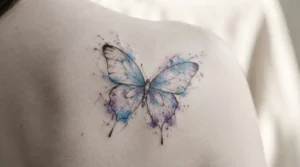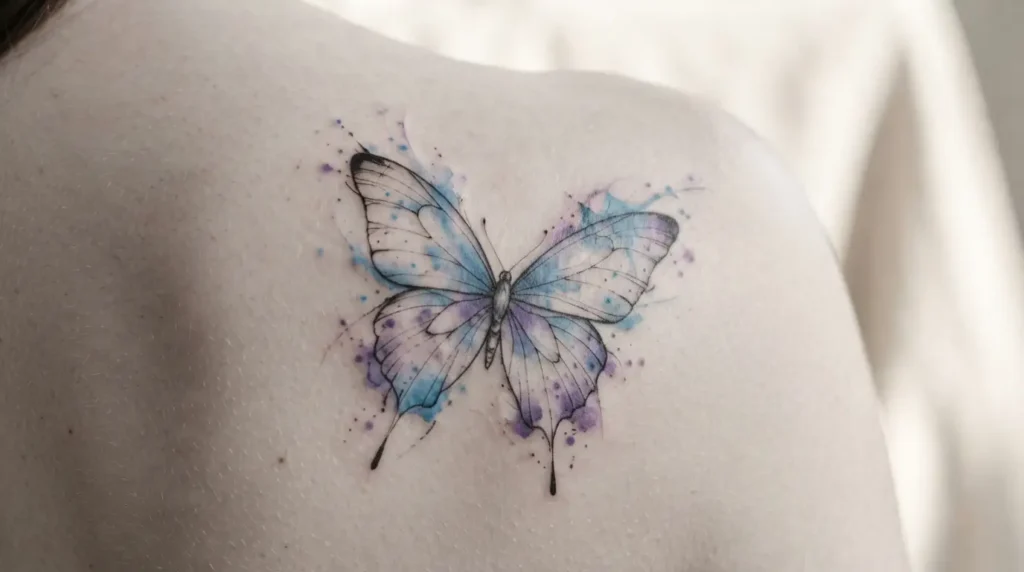
⚡ QUICK ANSWER: A watercolor butterfly tattoo mimics real watercolor painting — soft color washes, paint splashes, and gradient blending instead of heavy black outlines. Blues, purples, pinks, and sunset oranges dominate. It looks dreamy and artistic, but saturation quality and placement decide how well it ages.
A watercolor butterfly tattoo looks like it was painted straight onto your skin — soft washes of blue melting into violet, a splash of pink trailing off the wing like a brush just lifted away. It’s the most romantic style on Pinterest, and also the most debated.
You’ve probably saved dozens of these designs already and wondered the same two things everyone asks: will it fade into a blurry smudge? and where should I put it? This guide answers both honestly — plus 40 design ideas grouped by vibe, pain-level placement picks, and exactly how to make the color last.
📌 KEY TAKEAWAYS
- Watercolor butterfly tattoos use paint-like washes, gradients, and splashes instead of bold outlines
- Blues, purples, and pinks dominate; adding black linework dramatically improves longevity
- Yes, light washes can fade faster than blackwork — artist skill and placement matter more than the style itself
- Forearm, shoulder blade, and outer thigh = gentlest spots; ribs and spine = painful
- Choose an artist with healed watercolor examples — saturation skill is everything
What Is a Watercolor Butterfly Tattoo?
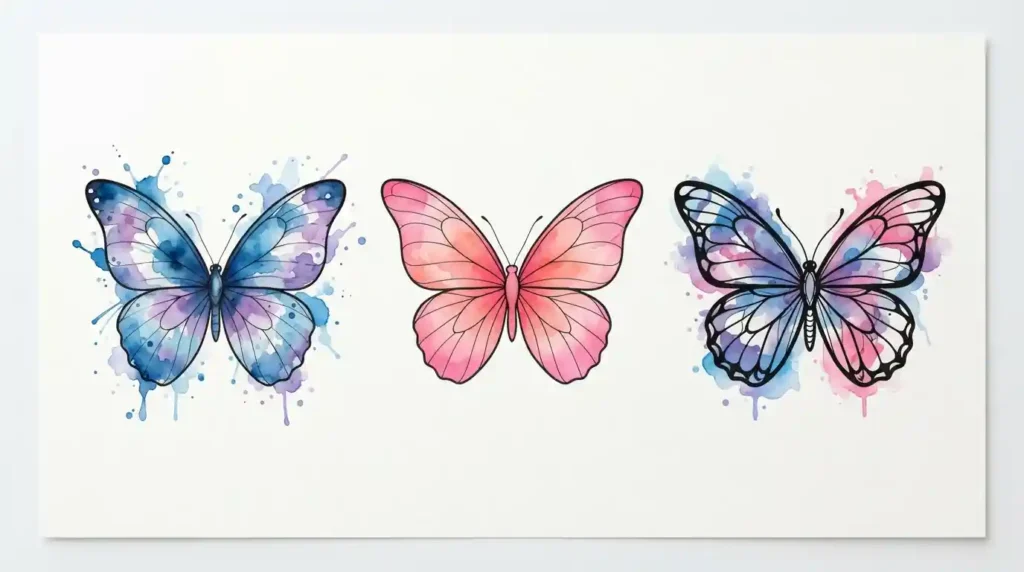
A watercolor butterfly tattoo trades the traditional heavy black outline for layered color washes, soft gradients, and intentional “imperfections” — drips, splatters, and pigment bleeding past the edges. The result looks like the artist painted your skin with a wet brush.
The style emerged in the early 2010s when a handful of European artists started treating skin like paper, and it exploded once it hit Instagram. Publications like Byrdie have covered the trend’s rise repeatedly — and its aging controversy too.
Butterflies are the perfect subject for it. Their wings are already symmetrical color gradients in nature, so paint-style blending doesn’t fight the design — it enhances it. And if you’re choosing colors for their meaning, not just aesthetics, our guide to butterfly tattoo meanings and symbolism covers what each shade has represented across cultures.
40 Watercolor Butterfly Tattoo Ideas by Vibe
Every idea below is a real design direction you can bring to an artist. Find your vibe first, then screenshot the closest matches as references.
Blue & Purple Dream (1–5)
- Blue morpho wash with violet splash wings
- Purple-to-blue ombré butterfly with drifting pigment
- Blue butterfly with tiny star splatter around it
- Indigo wings with a teal drip effect
- Lavender wash butterfly with silver dot accents
Pink & Blush Romantic (6–10)
- Blush-pink butterfly with a coral splash trail
- Magenta-to-rose gradient wings
- Soft pink butterfly with heart-shaped splatter
- Peach and rose-quartz wash with gold speckles
- Cherry blossom petals swirling behind a pink butterfly
Sunset & Monarch Warmth (11–15)
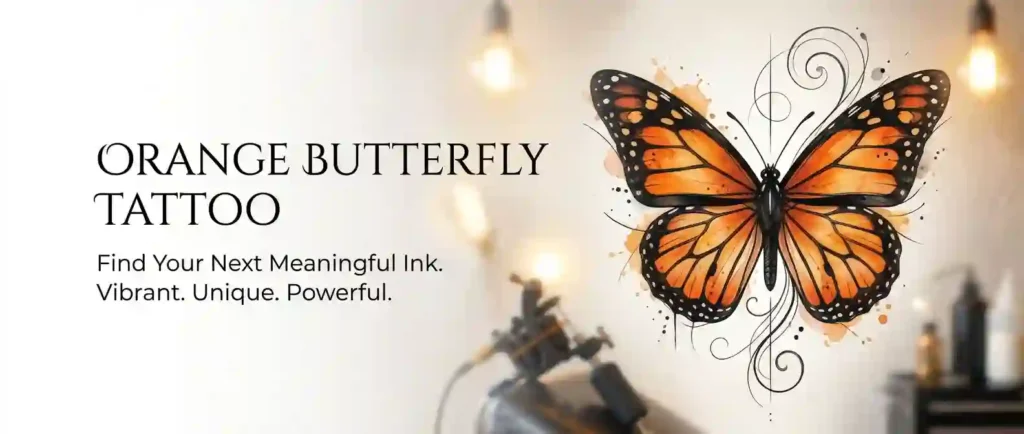
- Monarch silhouette in an orange-to-red sunset wash
- Amber and gold monarch with a black line body
- Full rainbow gradient butterfly
- Teal-to-yellow tropical morpho
- Fiery orange butterfly with ember-like splatter
Warm-toned designs carry the monarch’s energy of hope and journey — the monarch butterfly tattoo meaning guide explains why orange wings hit differently.
Splash & Abstract Art (16–20)
- Butterfly formed entirely from overlapping color splashes
- Half butterfly, half paint drip
- Double-exposure style: butterfly dissolving into a pigment cloud
- Brushstroke wings with visible paint texture
- Ink-blot butterfly with mirrored symmetry
Minimal Watercolor (21–25)
- One-line butterfly with a single blue wash behind it
- Two-color wash with clean edges and no splatter
- Tiny pastel gradient butterfly, no outline
- Minimal black line butterfly plus one pink brushstroke
- Soft watercolor rectangle frame with the butterfly inside
If full color feels like too much, these simple butterfly tattoo ideas that age well are the low-commitment alternative.
Watercolor + Blackwork Fusion (26–30)
- Black detailed wings with color bleeding past the edges
- Geometric black butterfly with a watercolor fill
- Realistic black-and-grey butterfly with a color aura
- Bold black outline with a gradient interior
- Stippled black butterfly with rainbow mist
Tiny & Hidden (31–35)
- Fingernail-size blue wash butterfly on the wrist
- Behind-the-ear purple micro butterfly
- Ankle butterfly with a trailing splash
- Collarbone butterfly with a fading color tail
- Finger butterfly in one soft hue
For more small-scale options that hold their lines over the years, browse our small butterfly tattoo ideas that age well.
Statement Pieces (36–40)
- Half-sleeve of butterflies rising in a color trail
- Back piece: large morpho with paint-drip wings
- Thigh statement: butterfly in a floral watercolor garden
- Side-rib butterfly with cascading color
- Shoulder-to-arm butterfly with wind-blown pigment streaks
Do Watercolor Butterfly Tattoos Fade Faster? The Honest Answer
Let’s skip the sales pitch: yes, watercolor tattoos can fade faster than bold blackwork. Light washes and pastel pigments sit closer to the skin’s surface tone, they lack the structural backbone of black outlines, and white highlights — a watercolor signature — are usually the first thing to break down.
But “the style fades” is only half the story. What actually decides your tattoo’s future:
- Artist saturation. A skilled artist packs pigment densely. A rushed one leaves watery, patchy color that blurs within a few years. This is the number-one factor.
- Placement. Constant sun and friction age any tattoo faster. A wash on the inner arm outlives one on the top of the hand.
- Size. Delicate details under 2 inches blur sooner simply because there’s less pigment holding each shape. That dreamy micro wash on the finger? The first to go soft.
- Aftercare and sun habits. UV is the silent killer of light pigments. Daily SPF on a healed tattoo is the cheapest longevity trick there is.
The smartest compromise is anchored watercolor: black linework defining the butterfly, with color washes bleeding inside and beyond it. You keep the painted look, but the black structure keeps the shape readable even as softer tones mellow. Most experienced artists now recommend it for first-timers.
Best Placements for a Watercolor Butterfly Tattoo
Watercolor needs room to breathe — gradients and splashes get muddy when squeezed into tiny spaces. Aim for at least 3 inches if you want the true painted effect. Here’s how the popular spots compare:
| Placement | Typical Pain | Best Size | Why It Works |
|---|---|---|---|
| Forearm | Low–Moderate | 3–5 in | Daily visibility, easy healing |
| Shoulder blade | Moderate | 3–6 in | Flat canvas, hide-or-show |
| Outer thigh | Low–Moderate | 4–6 in | Room for large washes |
| Ankle / wrist | Moderate–High | 1–2 in | Cute, but tiny washes blur sooner |
| Ribs | High | 2–4 in | Private and dramatic |
| Spine | High | 2–4 in | Bony; suits delicate vertical designs |
Pain is personal — these reflect common descriptions from tattooed folks, not guarantees. For a full body-map with more spots, see our guide to butterfly tattoo ideas and placements.
How to Make Your Watercolor Tattoo Last Longer
- Pick saturated over pale. Deep blues and purples outlive pastel pinks. If you love pastels, ask your artist to go one shade deeper than the reference.
- Choose anchored designs. Black lines + color wash = structure that survives softening.
- Heal by the book. Follow your artist’s aftercare instructions exactly — general guides like Healthline’s tattoo aftercare overview match what most studios recommend.
- SPF forever. Once healed, sun protection is the difference between color that mellows gracefully and color that vanishes.
- Plan a refresh. A touch-up every few years is normal for this style — budget for it mentally, not as a flaw.
Watercolor vs. Other Butterfly Styles
| Style | Look | Aging | Best For |
|---|---|---|---|
| Pure watercolor | Paint-only, no outlines | Needs touch-ups sooner | Artistic maximalists |
| Anchored fusion | Black lines + color wash | Ages best of the colorful styles | First-timers who want color |
| Fine line + wash | Delicate lines, soft tint | Good with sun care | Minimalist romantics |
| Realistic + splash | Detailed wings, abstract edge | Strong | Statement pieces |
What to Tell Your Artist
Bring two or three reference photos and say the words “watercolor style with saturated washes” — then ask the question that separates good artists from great ones: “Can I see healed photos of your watercolor work?” Fresh tattoos always look perfect; healed ones reveal the truth about their saturation skill.
Also confirm three things: whether they pack color densely or paint light, whether they recommend anchored linework for your placement, and how they’d adapt the design to your skin tone. An artist who answers all three confidently is your artist.
FAQ About Watercolor Butterfly Tattoos
Do watercolor butterfly tattoos fade faster?
They can. Light washes and pastel pigments break down faster than bold black ink, especially without outlines. What matters most is your artist’s saturation skill, sun exposure, and placement. A well-saturated 3-inch piece on a protected spot can age beautifully — a pale, tiny wash on the wrist will not.
How much does a watercolor butterfly tattoo cost?
Usually more than a simple line butterfly of the same size. Color blending takes longer and demands advanced skill, so artists charge accordingly. Price depends on your city, the artist’s experience, size, and how many colors you use — book a consultation for an exact quote.
Does a watercolor tattoo hurt more than black ink?
No — pain comes from placement and needle work, not ink color. That said, watercolor pieces often need extra passes to build smooth gradients, so sessions can run a little longer. More time under the needle means more overall discomfort, so plan breaks for bigger pieces.
Which colors show up best in watercolor tattoos?
Saturated mid-tones — blues, purples, magentas, oranges — hold pigment best and stay readable on most skin tones. Very pale pastels and white highlights fade first and can disappear on deeper skin tones. Ask your artist to test contrast against your undertone before finalizing the palette.
Can a faded watercolor tattoo be fixed?
Yes. A touch-up session can re-saturate the color, and many people convert faded washes into blackwork fusion designs for longer life. Go back to your original artist if possible — they know your skin and ink history. Fading is normal for this style, not a failure.
Final Thoughts
A watercolor butterfly tattoo is the closest ink gets to wearable art — soft, emotional, and completely personal. Go in with open eyes: choose a saturated palette, lean toward anchored linework, place it somewhere the sun rarely finds, and pick an artist whose healed work proves they can paint on skin.
Not sure watercolor is your style yet? Compare it with more butterfly tattoo ideas and placements, or brush up on butterfly tattoo meanings and symbolism so your colors tell the right story.
The best watercolor butterfly tattoo isn’t the one with the most likes — it’s the one you’ll still love in ten years. Choose like it’s forever. Because it is.