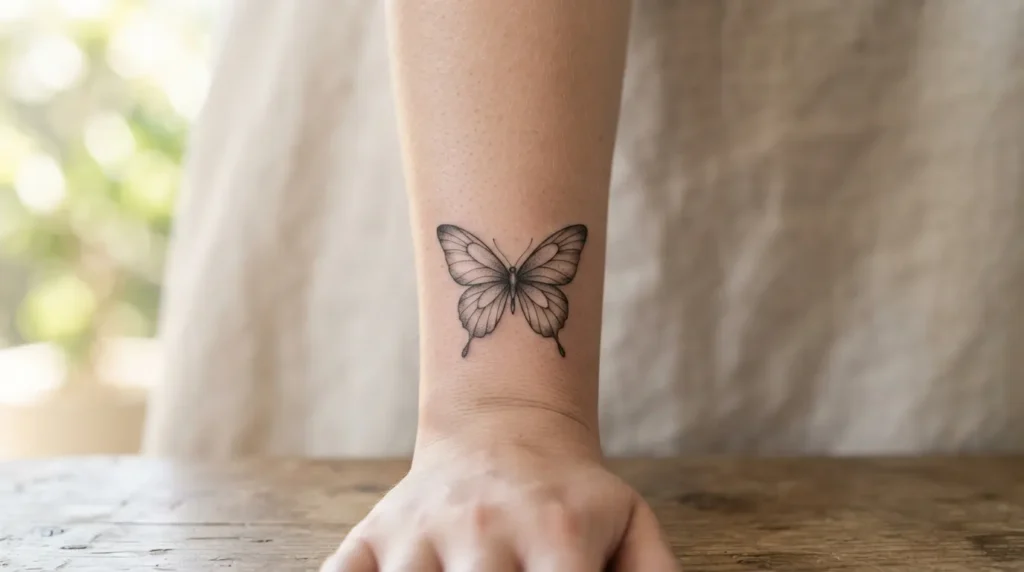
⚡ QUICK ANSWER: A butterfly tattoo is one of the most popular tattoo designs in the world, symbolizing transformation, freedom, and rebirth. Styles range from tiny fine line outlines to full watercolor pieces. Forearm, shoulder blade, and thigh are the gentlest placements — pain and longevity depend on size, style, and spot.
The butterfly tattoo is the most searched tattoo design in the world — and it has held that crown for years. Surveys suggest roughly a third of Americans now have at least one tattoo [STAT: verify — Pew Research], and butterflies consistently rank among the most requested designs in studios everywhere.
But popularity creates a real problem: with millions of butterfly tattoos already out there, how do you choose one that feels like you — and one you’ll still love in ten years?
That’s what this guide is for. Below you’ll find the meanings, the seven major styles, the best placements with honest pain levels, sizing rules, realistic costs, and aftercare basics. Think of it as your complete roadmap — with links to our deep-dive guides along the way.
📌 KEY TAKEAWAYS
- Butterflies symbolize transformation, freedom, and rebirth across many cultures
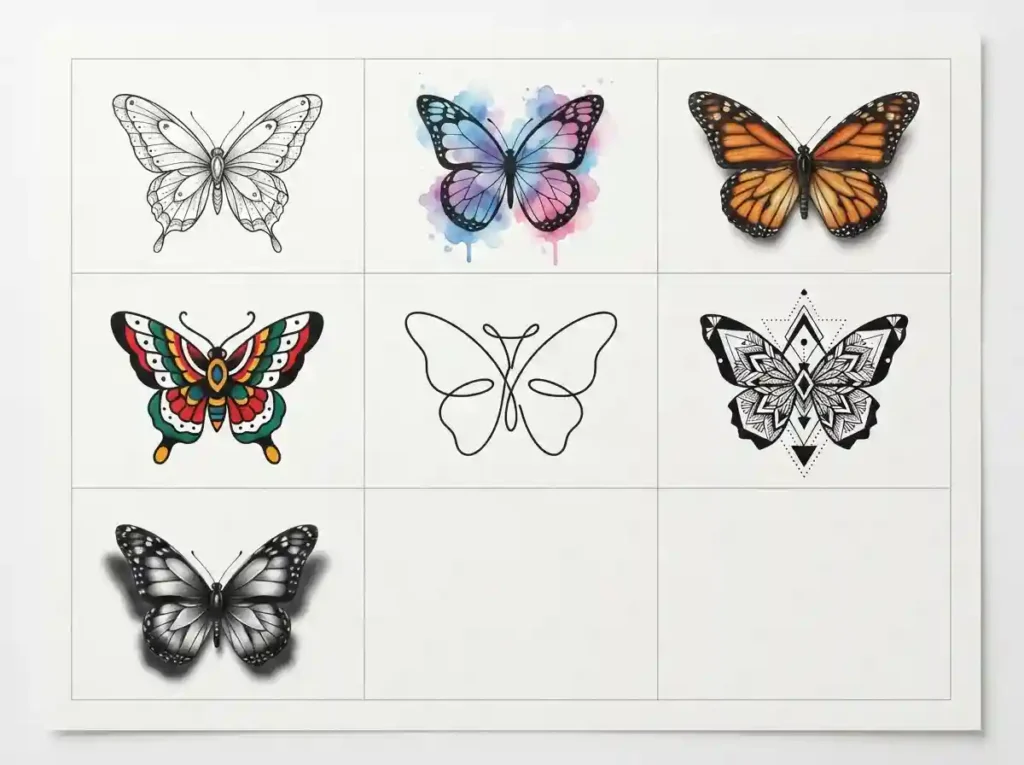
- Seven major styles: fine line, watercolor, realistic, traditional, minimalist, blackwork/geometric, and 3D
- Forearm, shoulder blade, and outer thigh = gentlest spots; ribs, spine, and ankle = the spicy ones
- The aging sweet spot is 2–3 inches — enough room for detail that stays crisp
- Cost typically runs from a shop’s minimum to a few hundred dollars, depending on size and detail
- Always judge an artist by their healed portfolio, not fresh Instagram photos
Why Butterfly Tattoos Never Go Out of Style
Trends come and go — barbed wire, infinity signs, tiny clouds — but butterfly tattoos keep flying. The reason is simple: the butterfly works on every body, scales from fingernail-size to full back piece, and carries meaning that doesn’t expire.
Butterflies have appeared in human art for thousands of years, from ancient Greek depictions of Psyche to Japanese woodblock prints, as Britannica notes in its coverage of the butterfly’s cultural history. Few designs can claim that résumé.
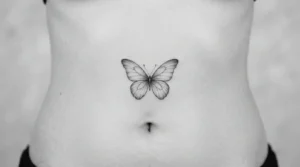
Celebrities keep the momentum going too. When Harry Styles revealed his fine line stomach butterfly, studios worldwide reported a wave of copycat requests — we break down that story in our Harry Styles butterfly tattoo guide.
Butterfly Tattoo Meanings: What Your Ink Says
Ask ten people what a butterfly tattoo means and you’ll get ten honest answers — that’s the beauty of it. But a few themes come up again and again across cultures:
- Transformation — the caterpillar-to-butterfly metamorphosis is nature’s most dramatic rebirth story
- Freedom — something unbound, weightless, going where it pleases
- Rebirth and hope — new chapters, surviving hard seasons, starting over
- The soul — in several traditions, butterflies carry the spirits of loved ones
Cultural context matters. In Mexican tradition, monarchs are closely tied to Día de los Muertos as returning souls, and in Japanese culture butterflies represent the soul in both life and death. If a specific heritage meaning draws you in, learn it fully first — our guide to butterfly tattoo meanings and symbolism covers the full history, and the monarch butterfly tattoo meaning guide explores the Mexican connection in depth.
Butterfly Tattoo Styles: 7 Looks to Know
The style you choose affects everything — pain session length, cost, and especially how your tattoo ages. Here are the seven looks every studio offers:
1. Fine Line
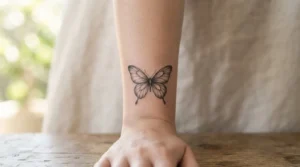
Thin, delicate linework with minimal shading. Elegant and discreet, but it demands a specialist — fine lines blur faster than bold work when done poorly.
2. Watercolor
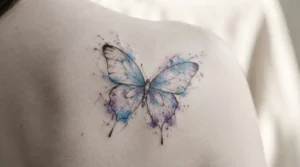
Paint-like washes of color with soft gradients and splashes, as if a brush just touched your skin. Gorgeous, artistic, and the most debated style for aging. Our watercolor butterfly tattoo guide gives you the honest fade facts plus 40 designs.
3. Realistic
Photo-level wings with true-to-nature detail and shading. Best at 3 inches or larger, because tiny realistic work loses its detail fast.
4. American Traditional
Bold black outlines, limited saturated color, instantly readable from across the room. The most age-proof style on this list — traditional pieces from the 1940s still look sharp today.
5. Minimalist & Single-Line
One continuous stroke or a tiny simplified shape. Quiet, modern, and perfect for a first tattoo — though micro details need realistic expectations about long-term crispness.
6. Blackwork & Geometric
Heavy black ink, symmetrical patterns, dotwork shading. Striking and long-lasting, with a boldness most floral styles don’t have.
7. 3D
Shading tricks that make wings look like they’re lifting off the skin. Needs size (4+ inches) and a master-level artist to pull off convincingly.
| Style | Look | Aging | Best For |
|---|---|---|---|
| Fine line | Delicate thin lines | Good with a skilled artist | Minimalists, first ink |
| Watercolor | Painted color washes | Needs touch-ups sooner | Artistic romantics |
| Realistic | Photo-detailed wings | Strong at 3+ inches | Statement pieces |
| Traditional | Bold lines, solid color | Excellent — the toughest | Lifelong crispness |
| Minimalist | One-line or micro | Micro details soften | Subtle, hidden ink |
| Blackwork | Bold black + pattern | Excellent | Edgy, graphic looks |
| 3D | Optical illusion depth | Strong when large | Showstopper pieces |
Best Butterfly Tattoo Placements (Honest Pain Levels)
Placement decides three things at once: how much it hurts, how well it ages, and who gets to see it. Here’s the honest body map:
| Placement | Typical Pain | Best Size | Why People Love It |
|---|---|---|---|
| Forearm | Low–Moderate | 2–5 in | Easy session, daily visibility |
| Shoulder blade | Moderate | 3–6 in | Flat canvas, show or hide |
| Outer thigh | Low–Moderate | 3–6 in | Room to go big, forgiving skin |
| Wrist | Moderate–High | 1–2 in | Dainty and personal |
| Ankle | Moderate–High | 1–3 in | Cute with sandals, hides at work |
| Behind the ear | Moderate–High | Under 1 in | Secret with a reveal |
| Stomach | Moderate–High | 3–5 in | Bold statement canvas |
| Ribs | High | 2–4 in | Private and dramatic |
| Spine | High | 2–4 in | Elegant vertical designs |
Pain is personal — these reflect common descriptions, not guarantees. The rule of thumb: flesh and padding feel gentle; bone, ribs, and thin skin feel spicy. For a deeper walk-through of every spot, see our guide to butterfly tattoo ideas and placements.
Choosing the Right Size
Size isn’t just about boldness — it decides how much detail survives the years:
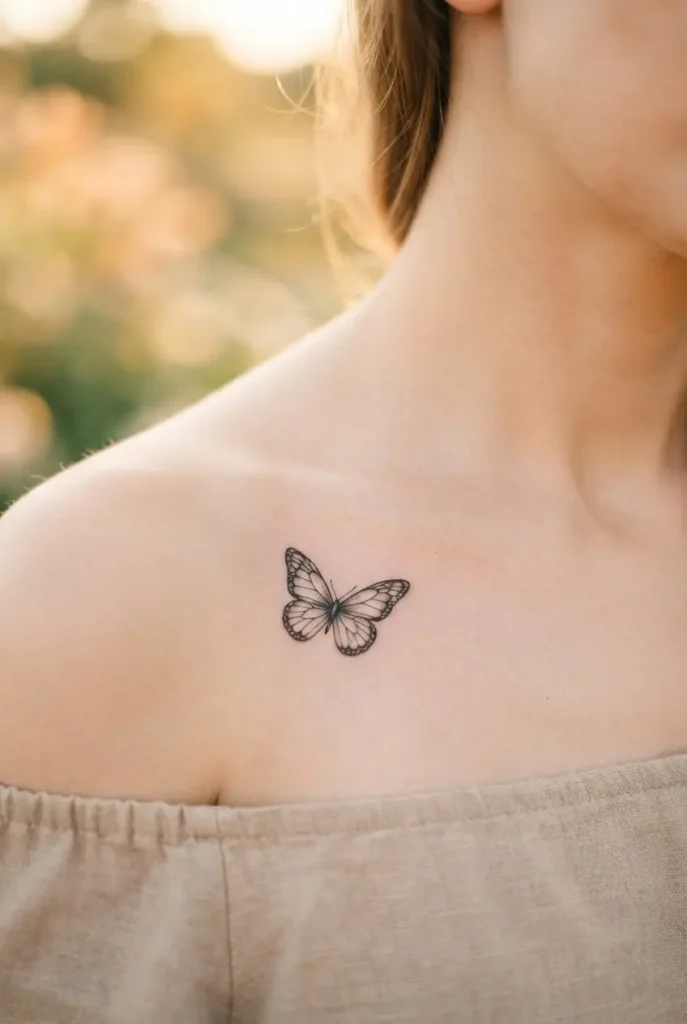
- 1–2 inches — perfect for wrist, ankle, collarbone, behind the ear. Keep the design simple; tiny details blur first. Our small butterfly tattoo ideas that age well show exactly what holds up.
- 2–3 inches — the sweet spot. Enough room for wing patterns and shading, flexible placement, one short session.
- 4+ inches — statement territory for stomach, thigh, back, or sleeve work. Realistic and 3D styles need this room to shine.
If you want maximum meaning with minimum commitment, browse our simple butterfly tattoo ideas that age well — proof that less really can be more.
How Much Does a Butterfly Tattoo Cost?
Most US shops charge a minimum of $50–$100, which covers even the tiniest butterfly. A detailed 2–3 inch piece with shading or color typically lands between $150 and $400, while large realistic or 3D pieces can run well beyond that. These are general ranges — every city, studio, and artist prices differently, so always get a direct quote.
What moves the price: size, color count, placement difficulty (ribs and spine take longer), and the artist’s experience level. One budget tip — if you choose watercolor, plan mentally for a possible touch-up down the road. It’s normal for the style, not a defect.
Butterfly Tattoo Aftercare in 5 Steps
Healing decides how your ink looks for the next decade, so treat these two weeks seriously:
- Follow your artist’s instructions exactly — they know their ink and your skin
- Keep it clean and lightly moisturized with fragrance-free products as directed
- Don’t pick or scratch — flaking is normal; pulling ink out is not
- Stay out of pools, baths, and direct sun while healing
- SPF forever after healing — UV is the number-one killer of fine lines and light colors. The American Academy of Dermatology offers solid general guidance on caring for healing skin
FAQ About Butterfly Tattoos
What does a butterfly tattoo mean?
Most commonly transformation, freedom, and rebirth — inspired by the caterpillar’s metamorphosis. Meanings shift by culture: Mexicans connect monarchs to returning souls, and Japanese tradition ties butterflies to the spirit. Ultimately, your personal reason is the meaning that matters most.
Where is the best place for a butterfly tattoo?
For the best balance of low pain and long-term aging, the forearm, shoulder blade, and outer thigh win. For tiny hidden ink, the wrist, ankle, and behind the ear are favorites. Avoid high-friction zones like fingers if crispness matters to you.
Do butterfly tattoos hurt?
Placement drives the pain, not the design. Fleshy spots like the forearm and outer thigh feel mild to moderate, while ribs, spine, and ankle sit higher — often described as 6–8 out of 10. Small designs keep sessions short, which makes any spot more manageable.
How much does a butterfly tattoo cost?
Expect a shop minimum around $50–$100 for tiny designs, roughly $150–$400 for detailed palm-size work, and more for large realistic pieces. Prices vary a lot by city and artist reputation, so book a consultation for an accurate quote before committing.
Are butterfly tattoos just for women?
Not at all. Harry Styles’ famous stomach butterfly is one of the most requested celebrity tattoos in the world. Men often lean toward realistic, blackwork, or traditional styles at larger sizes — but the symbolism of transformation belongs to everyone.
How long does a small butterfly tattoo take?
A simple fine line piece under 2 inches usually takes 30–60 minutes including setup. Add shading, color, or detail and expect 1–2 hours. Anything larger or multi-session — like sleeves or back pieces — gets scheduled across visits.
Final Thoughts
A butterfly tattoo has earned its spot as the world’s favorite design: meaning that runs deep, styles for every personality, and a shape that flatters every placement from collarbone to ankle. Choose your style with aging in mind, size it 2–3 inches if you’re unsure, place it somewhere the sun rarely finds, and pick your artist by their healed work.
From here, go deeper wherever your heart leans: explore butterfly tattoo ideas and placements to find your canvas, study butterfly tattoo meanings and symbolism to give it a story, or start small with simple butterfly tattoo ideas that age well.
Whatever butterfly tattoo you choose, make it one you’d proudly explain to your grandkids someday. Ink like that never goes out of style.