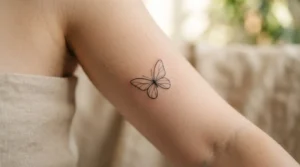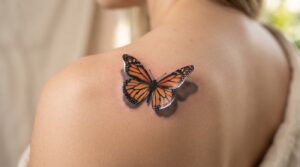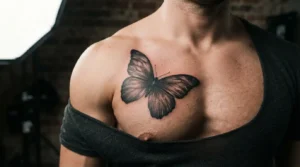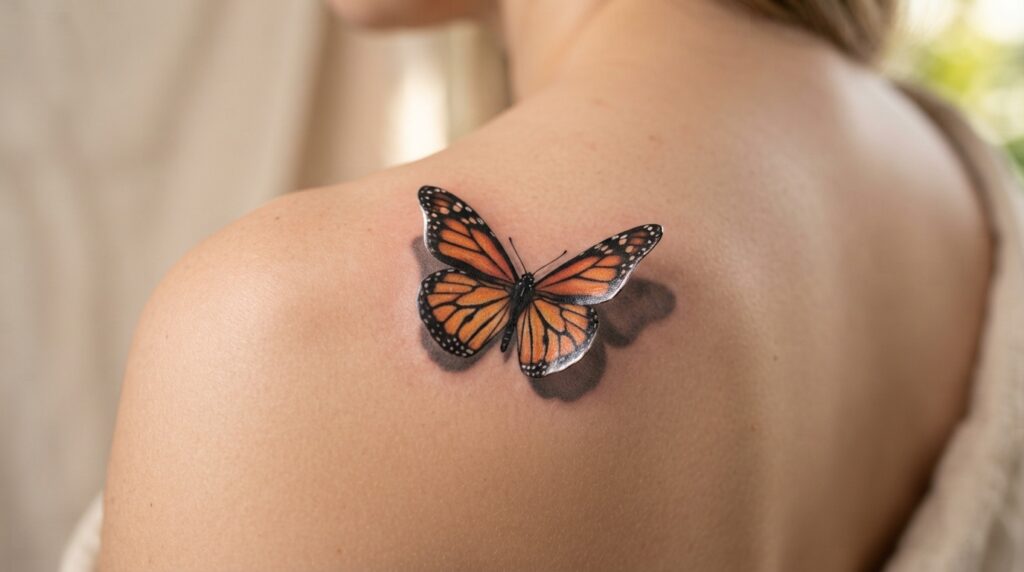
⚡ QUICK ANSWER: A 3D butterfly tattoo uses advanced shading, cast shadows, and highlights to create the illusion of depth — as if the wings are lifting off your skin. It needs room to work: 4 inches minimum, an artist with proven realism skill, and typically a few hundred dollars for a quality piece.
A 3D butterfly tattoo is the design that makes strangers almost reach out and touch your arm. The wings look raised, the shadow looks cast on the skin beneath them, and the whole piece plays a trick your brain refuses to fully accept — even when you know it’s flat.
But the illusion has strict rules. Done small, it collapses into a smudgy mess. Done by the wrong artist, it looks like a sticker with a gray blob under it. Done right, it’s the most jaw-dropping butterfly ink money can buy. This guide covers how the trick actually works, 30 design ideas, the non-negotiable size rule, honest costs, and exactly how to vet an artist who can pull it off.
📌 KEY TAKEAWAYS
- 3D realism creates depth with cast shadows, edge highlights, gradients, and perspective — not special ink
- The hard rule: 4 inches minimum. The illusion physically cannot work smaller
- Chest, shoulder blade, thigh, and forearm are the best flat canvases; ribs and spine add pain without adding depth
- Expect a few hundred dollars minimum — 3D is slow, layered work by senior artists
- Vet artists by healed realism photos, not fresh ones — depth is the first thing to blur if saturation was weak
- Love the look but want small? Semi-realistic shading gives depth hints without full illusion
How a 3D Butterfly Tattoo Works (The Illusion, Explained)
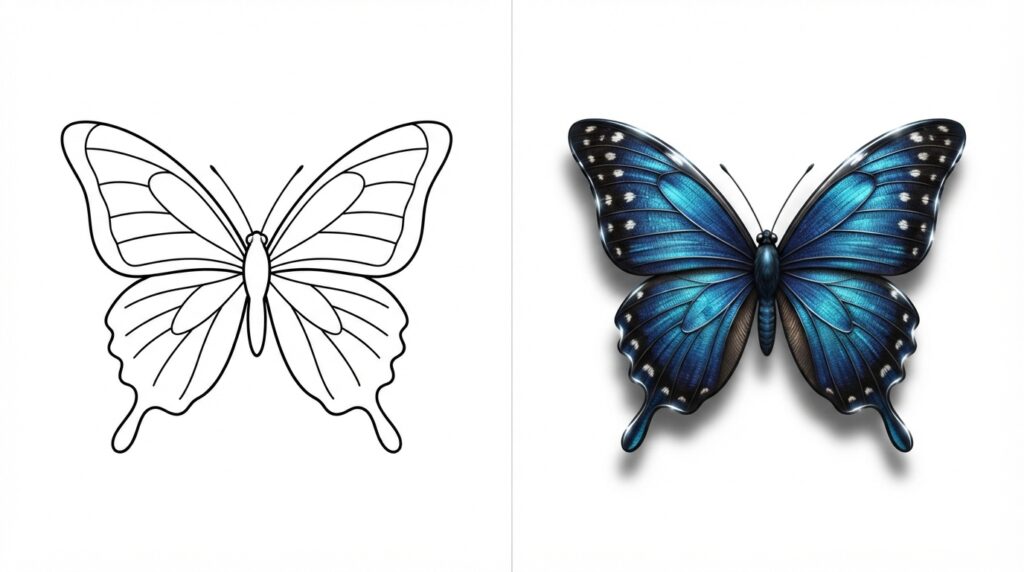
Here’s the first surprise: there’s no such thing as “3D ink.” A 3D butterfly tattoo uses the same black and color pigments as any other piece — the depth is pure technique. Four tools create the trick:
| Technique | What the Artist Does | The Effect |
|---|---|---|
| Cast shadow | Soft grey shadow painted slightly off-center beneath the butterfly | Wings appear physically lifted off the skin |
| Edge highlight | Fine white or pale lines along wing edges facing the light | Edges catch light like a real raised object |
| Gradient shading | Wing color darkens toward the body, lightens toward the tips | Wings look rounded and dimensional, not flat |
| Perspective | One wing drawn slightly larger, angled, or mid-fold | The butterfly occupies space instead of lying flat |
Realism artists study real butterflies for exactly this reason. A morpho’s wing isn’t actually “3D” in nature either — its shimmer comes from microscopic scales that reflect light, as Britannica explains in its coverage of butterfly wing structure. Tattoo artists borrow that light-play and exaggerate it. That’s the whole magic: understanding where light hits and where shadow falls.
This is also why placement matters more than any other style. The cast shadow has to fall somewhere believable — which means a relatively flat, open canvas with consistent light exposure. More on that below.
30 3D Butterfly Tattoo Ideas by Placement
Every idea below is sized for the illusion — nothing here works at fingernail scale, and that’s intentional. Screenshot your direction, then bring it to a realism specialist for adaptation.
Shoulder & Shoulder Blade (1–6)
- Realistic monarch with wings tilted mid-landing, shadow falling toward the collarbone
- Morpho appearing to rest on the shoulder cap, highlight on the upper wing edge
- Butterfly caught mid-takeoff, motion blur on the lower wings
- Two stacked butterflies, the upper one casting its shadow onto the lower
- Black-and-grey butterfly with wet-look wings, droplets catching light
- Butterfly emerging from a torn-paper effect in the skin
Chest & Sternum (7–11)
- Center-chest butterfly with symmetric spread wings and a shadow beneath the body
- Sternum piece: butterfly appearing to slide under the skin, one wing out
- Butterfly perched on a 3D chain draped across the collarbone
- Realistic swallowtail with gradient wings deepening toward the body
- Half-sleeve-to-chest flow: butterflies flying from arm to chest in perspective
Forearm & Wrist (12–17)
- Butterfly landing on the wrist with its shadow wrapping the arm’s curve
- Outer forearm monarch in full color, highlight along the leading wing edge
- Butterfly on a 3D-looking twig that follows the forearm line
- Trio of butterflies at descending sizes, each casting a shadow on the next
- Butterfly with wings catching a “window light” highlight from one side
- Black-and-grey realism piece with smoke swirling behind raised wings
Thigh & Calf (18–23)
- Large thigh piece: 6-inch morpho with a full cast shadow beneath
- Butterfly appearing to land on a real-looking wildflower stem
- Calf butterfly with depth-shaded wings over a mountain silhouette
- Butterfly mid-emergence from a cracked 3D chrysalis
- Watercolor splash base with a 3D-shaded butterfly rising from it
- Butterfly with a folded wing — the hardest and most impressive perspective trick
Statement & Concept Pieces (24–30)
- Full back: one giant butterfly with wings spanning shoulder to shoulder, shadow pooling at the spine
- Butterfly lifting off a mirror-shard background
- Half realistic, half skeleton-wing butterfly — depth on one side, structure on the other
- Butterfly casting a butterfly-shaped shadow that differs from itself (a silhouette with a story)
- Realistic butterfly with rain droplets beading on raised wings
- Blue morpho in full color with a grey cast shadow — color depth doubling the effect; see the shade guide in our blue butterfly tattoo meaning and designs article
- Butterfly flying out of an open 3D pocket-watch or locket
The Size Rule: Why a 3D Butterfly Tattoo Needs 4+ Inches
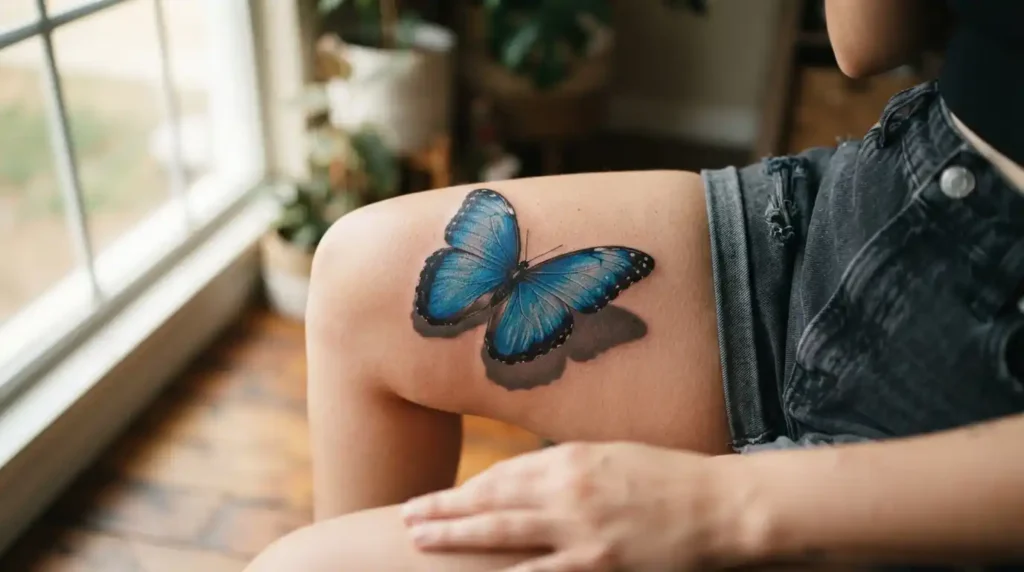
This is the section that saves you from regret, so read it twice. The 3D illusion is built from gradients — smooth transitions from light to dark. Human skin and ink physically cannot render smooth gradients below a certain size. Under 4 inches, a 3D butterfly tattoo becomes a regular tattoo with a gray smudge under it. The shadow has no room to fall convincingly, highlights merge into the color, and the depth effect dies.
- 4–5 inches — the minimum for a working illusion. Simple wing structure, one shadow source
- 5–7 inches — the sweet spot. Room for gradients, edge highlights, and a believable cast shadow
- 7+ inches — full dramatic potential: folded wings, multiple shadows, environmental effects
If your heart is set on a small butterfly — and honestly, small is the smarter first tattoo — don’t force 3D. Semi-realistic shading gives you depth hints at 2–3 inches without the full trick. Our small butterfly tattoo ideas that age well and simple butterfly tattoo ideas that age well both show designs that stay beautiful for decades at small sizes.
Best Placements for a 3D Butterfly Tattoo
3D needs the flattest canvas you can offer and forgiving pain levels, because sessions run long. The honest map:
| Placement | Typical Pain | Best Size | Why It Works |
|---|---|---|---|
| Shoulder blade | Moderate | 5–7 in | Flatest large canvas on the body |
| Outer thigh | Low–Moderate | 5–8 in | Room, low pain, rarely sun-exposed |
| Outer forearm | Low–Moderate | 4–6 in | Daily visibility, easy healing |
| Chest | Moderate–High | 6–10 in | Broad stage for dramatic shadows |
| Ribs | High | 4–6 in | Curved canvas; shadow logic gets tricky |
Pain is personal — these reflect common descriptions, not guarantees. For every zone compared side by side, see our guide to butterfly tattoo ideas and placements. And if the statement-piece route appeals, our butterfly sleeve tattoo planning guide shows how a 3D anchor piece grows into a full arm.
What Does a 3D Butterfly Tattoo Cost?
Honest planning numbers — every city and artist prices differently, so treat these as ranges, not quotes:
- 4–5 inch piece, single session: roughly $300–$600. Realism work is slow — expect 3–5 hours
- 6–8 inch piece with full effects: roughly $600–$1,200, sometimes split across two sessions
- Back or chest statement piece: $1,000+, multi-session by senior artists
Why the premium? 3D realism demands skills most tattooers never develop: smooth gradient control, light-source logic, and patience for layering. You’re paying for hours of deliberate shading, not a quick outline. For the full cost picture across every style, the complete butterfly tattoo guide breaks down all seven styles including this one.
How to Vet an Artist Who Can Actually Do 3D
- Search “realism tattoo artist” + your city — 3D is a realism specialty, not a general skill
- Demand healed photos. Fresh 3D always looks good. Healed work reveals whether the gradients held or went muddy. This is the single most important filter
- Look for cast shadows in their portfolio. If their “3D” pieces have no believable light source, they’re doing flat realism with a label
- Book a consultation, not a session. Bring your references and ask how they’d build the shadow for your placement. A real specialist answers instantly
- Accept the redraw. They’ll simplify your reference to make the illusion work — that’s expertise protecting your money
Want to understand the design before you brief the artist? Sketching your concept first makes every consultation sharper — our butterfly tattoo drawing guide walks through it step by step, and the butterfly tattoo stencil guide covers what happens to your approved design on appointment day.
Healing and Aging a 3D Tattoo
3D pieces heal like any other tattoo — follow your artist’s instructions exactly, and general references like Healthline‘s aftercare guides match standard studio advice. Two style-specific notes: heavy shading means more skin trauma than a fine line piece, so expect slightly more peeling; and the soft grey gradients that create your shadows are the tones most affected by sun.
The aging reality: no tattoo keeps its day-one contrast forever, and 3D is the style where slight softening is most visible — a fading shadow weakens the illusion. Daily SPF on the healed tattoo is what keeps the depth deep. Choose a placement clothing usually covers, and your 3D butterfly tattoo stays convincing for many years. For the full style-versus-style aging comparison, see our complete butterfly tattoo guide.
FAQ About 3D Butterfly Tattoos
What is a 3D butterfly tattoo?
A 3D butterfly tattoo is a realism-style piece that uses cast shadows, edge highlights, gradients, and perspective to make flat ink look physically raised off the skin. No special ink is involved — the depth is pure shading technique, which is why the style demands a large canvas and a specialist artist.
How much does a 3D butterfly tattoo cost?
Plan on roughly $300–$600 for a quality 4–5 inch piece, $600–$1,200 for larger work with full shadow effects, and $1,000+ for back or chest statement pieces. Realism is slow, layered work by senior artists — the hourly rate reflects hours of gradient shading, not just the design.
Does a 3D tattoo hurt more than a normal tattoo?
Not per minute — pain comes from placement, not style. But 3D sessions run longer because building smooth gradients takes time, so overall discomfort adds up. Choose a gentle canvas like the outer thigh or shoulder blade, eat beforehand, and take breaks; artists expect them on long realism sessions.
How big does a 3D butterfly tattoo need to be?
Four inches minimum, with 5–7 inches as the sweet spot. The illusion depends on smooth light-to-dark gradients, and skin can’t render them at small scales. Below 4 inches the cast shadow becomes a smudge. If you want a small butterfly instead, semi-realistic shading offers depth hints without the full trick.
Do 3D tattoos age well?
They age like any tattoo — with care. The soft grey gradients that create depth are the tones most affected by sun exposure, so a fading shadow gradually weakens the illusion. Daily SPF, a covered placement, and a skilled artist’s saturated work keep a 3D piece convincing for many years; touch-ups can restore depth later.
Can a 3D butterfly tattoo be done in color?
Yes — and color doubles the effect when done right. A blue morpho with gradient shading and a grey cast shadow is one of the most striking pieces in tattooing. Just know color realism takes even longer than black-and-grey, and saturated mid-blues hold depth far better than pale pastels.
Final Thoughts
A 3D butterfly tattoo is the loudest way to wear the world’s quietest symbol — and it rewards respect. Give it at least 4 inches of flat canvas, choose a placement the sun rarely finds, pay for a realism specialist whose healed work proves the illusion holds, and protect those soft grey shadows with SPF like the whole design depends on it. Because it does.
Start your planning with the complete butterfly tattoo guide, then follow the pipeline: sketch it, stencil it, wear it forever. A 3D butterfly tattoo done right doesn’t just decorate your skin — it stops conversations, starts others, and reminds everyone who sees it that transformation is the most beautiful trick in nature.